Titanium Bolts and Screws
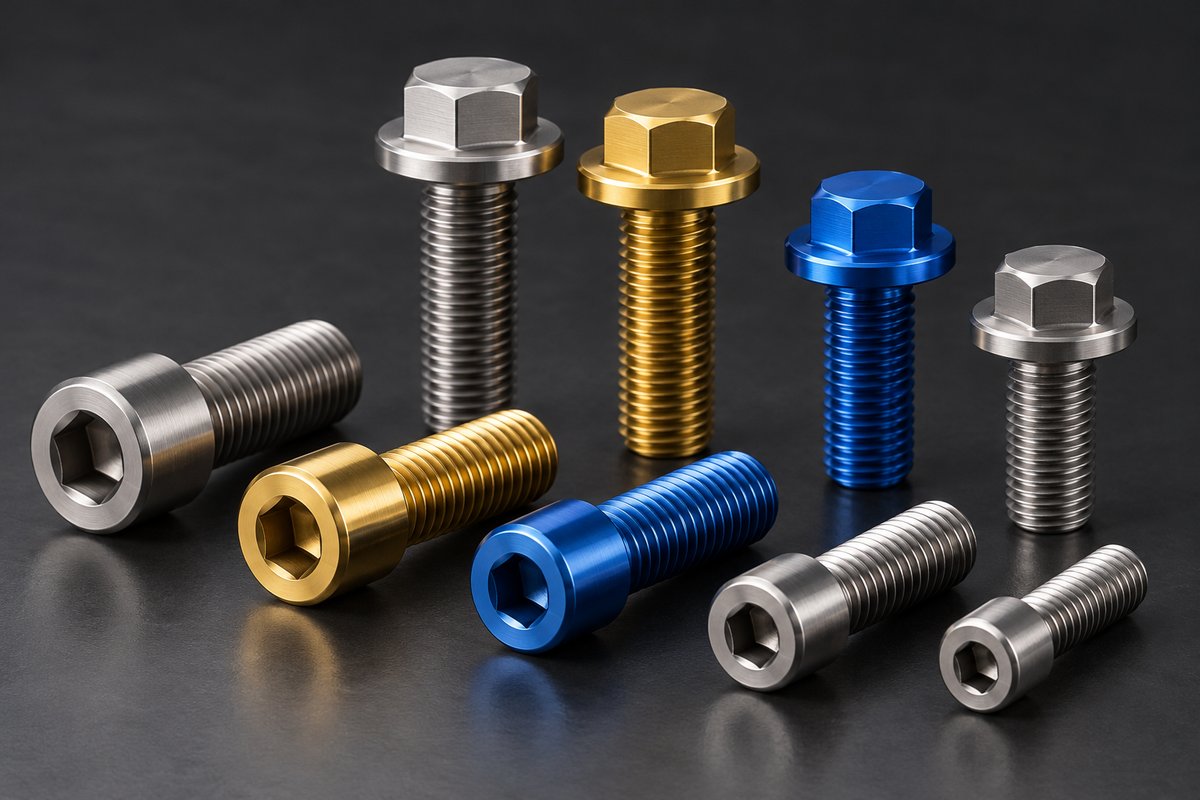
Titanium bolts combine high strength with about 56% of the weight of steel and excellent corrosion resistance. They are used in weight-sensitive equipment, marine and chemical environments, medical and analytical instruments, motorsport and cycling.
Titanium grades for fasteners
| Grade | Characteristics |
|---|---|
| Grade 2 (commercially pure) | Excellent corrosion resistance, easy to machine; lower strength |
| Grade 5 (Ti-6Al-4V) | The most common titanium alloy for bolts; high strength |
Reference: density about 4.4 g/cm³ for titanium versus about 7.8 g/cm³ for steel. ASTM B348 specifies a minimum tensile strength of 895 MPa for Grade 5 bar.
Things to watch
- Galling — titanium threads can gall against titanium or stainless. Use anti-seize and consider the mating material.
- Galvanic corrosion — check the environment when titanium contacts aluminum and other metals.
- Grades — steel property classes such as 10.9 do not apply; specify the titanium grade and standard.
Anodized colors
Titanium can be anodized gold, blue, purple and other colors. The color comes from light interference in the oxide layer and depends on voltage, so shades can vary slightly between batches. Agree a limit sample if appearance matters.
FAQ
Are titanium bolts stronger than stainless steel bolts?
Grade 5 titanium has a higher tensile strength than common stainless bolts such as A2-70, and is much lighter. Compare weight, corrosion resistance and cost for your application.
Can you make small quantities?
Titanium bolts are often turned, so small quantities can be quoted. For larger volumes we can review headed options.